June 6, 2026
This article explores the compelling reasons to choose mudjacking services over the more traditional approach of concrete replacement. Concrete surfaces, whether they are driveways, sidewalks, or patios, can suffer from settling and cracking over time. Understanding the benefits and drawbacks of mudjacking versus concrete replacement will equip you with the knowledge to make an informed decision on the best method for addressing your concrete repair needs.
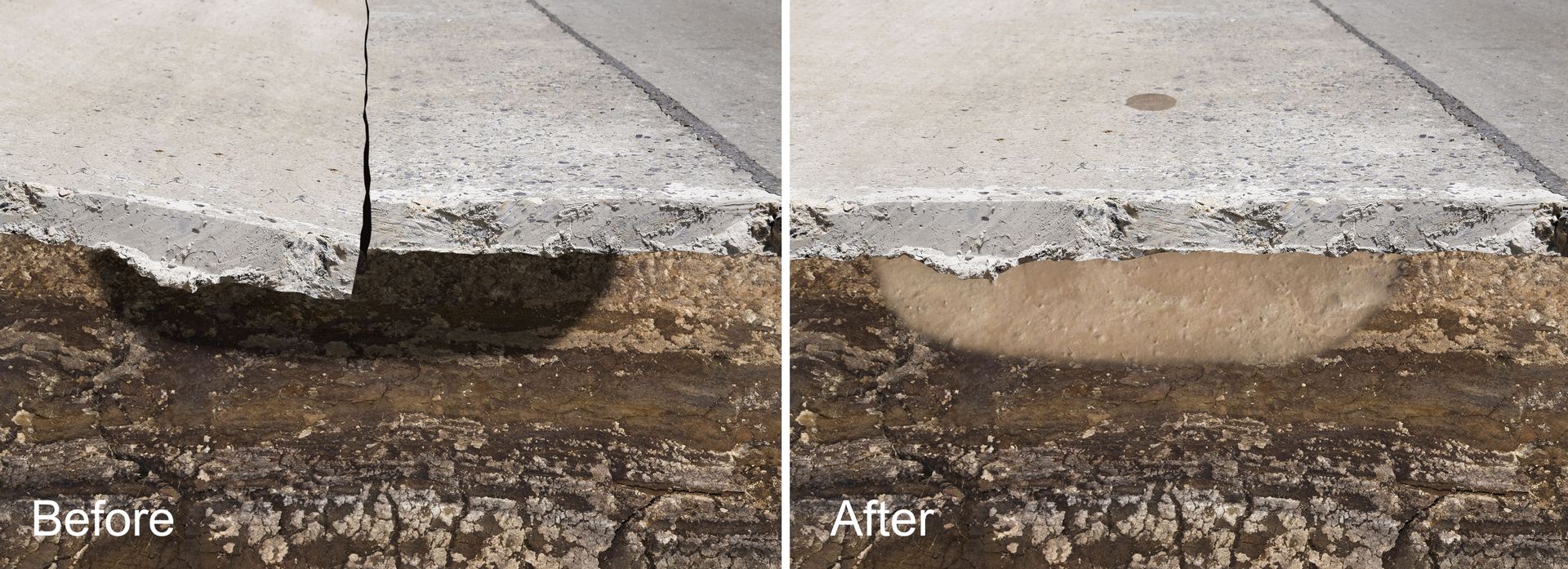
Mudjacking, also known as slab jacking, offers an economical, efficient, and environmentally friendly alternative for lifting and leveling concrete surfaces. By analyzing factors such as cost, time efficiency, environmental impact, durability, aesthetics, and versatility, this article aims to provide a comprehensive guide to understanding the advantages of mudjacking. Whether you're a homeowner facing an uneven driveway or a facility manager dealing with sunken walkways, this article is designed to offer valuable insights.
The significance of properly maintained concrete doesn't just rest with appearance; it extends to safety and functionality as well. Uneven concrete surfaces can pose tripping hazards and impact the overall structural integrity. By considering mudjacking as a viable option, you could save time and money while also minimizing disruption and reducing environmental impact. Now, let's delve into these aspects one by one.
Cost-Effectiveness
Initial Investment
Initial costs are a primary consideration when deciding between mudjacking and concrete replacement. Mudjacking is often more cost-effective, as it utilizes existing concrete, thereby reducing the need for new materials. This method generally presents lower upfront costs compared to complete replacement, which involves expenses for demolition, debris disposal, and new concrete pouring. According to IBIS World, the average residential mudjacking cost is $1,223, with a typical range of $661–$1,857, making it a budget-friendly choice for many homeowners. In contrast, removing and replacing concrete can be two to three times more expensive, as it often requires extensive site preparation and labor.
Long-Term Savings
Beyond the initial investment, mudjacking can also lead to substantial long-term savings. By restoring concrete to its original position, this technique can extend the life of the surface without the need for new materials. As mudjacking addresses the root causes of settling, such as soil erosion or compaction, it often results in more durable and lasting results. Over time, the reduced need for frequent repairs or replacements enhances its cost-efficiency. In contrast, poor soil conditions can lead to recurring settling issues, even after a full replacement, potentially resulting in higher cumulative costs over the lifespan of the surface.
Cost of Materials
Material costs also play a crucial role in the cost-effectiveness equation. Mudjacking uses a slurry composed of a mix of water, soil, and cement, which is pumped beneath the sunken concrete slab to lift it. This slurry is generally inexpensive and uses fewer raw resources compared to the aggregate, cement, and other materials needed for a full concrete replacement. Concrete replacement additionally requires forms, reinforcement bars, and often finishes, which significantly increase the material bill. Thus, from a purely material cost standpoint, mudjacking emerges as a more resource-efficient method for concrete restoration.
Labor Costs
Labor forms another substantial component of the overall cost in both methods. Mudjacking typically requires less labor and can often be accomplished by a smaller crew in a shorter period. This is in stark contrast to concrete replacement, where extensive labor is needed for removing old concrete, preparing foundations, pouring, and finishing new concrete. As labor rates increase, the cost-effectiveness of mudjacking becomes apparent, providing homeowners and business owners with an efficient approach to maintenance. The reduced time and manpower requirements directly translate into savings for those opting for mudjacking solutions over traditional replacements.
Potential for Future Repairs
The potential for future concrete issues and necessary repairs should also be weighed in your decision. Mudjacking addresses the root cause without disturbing landscaping or surrounding structures, thereby diminishing the likelihood of future repairs. By stabilizing the existing concrete, it provides a durable fix that can withstand typical wear and tear for years. However, if the underlying soil conditions are poor, additional interventions may be necessary to prevent further settling. In the case of concrete replacement, improper handling during the construction phase can sometimes lead to structural defects, possibly necessitating future interventions.
Time Efficiency
Project Duration
Time efficiency is often a major concern, particularly when the construction work has the potential to disrupt daily activities. Mudjacking is generally a faster process, often completed within a few hours depending on the scope and scale of the project. This expediency stands in welcome contrast to concrete replacement projects which can take several days to a week due to demolition, form setting, curing, and finishing processes. Quick completion is particularly beneficial for busy environments such as schools or commercial properties where extended downtime is not feasible. Consequently, mudjacking offers a compelling solution for those seeking minimal disruptions.
Pre-Project Preparation
The preparation required before a project commences can significantly impact timelines and costs. Mudjacking requires minimal site preparation and typically involves drilling small holes in the existing concrete to inject the slurry mixture. This preparation is less invasive, and the holes are easily patched after lifting the concrete. In contrast, concrete replacement requires a range of preparatory steps such as demolition and debris clean-up that are both time-consuming and labor-intensive. The removal of existing concrete may also require heavy machinery and equipment, necessitating additional coordination and logistics planning.
Weather and Season Considerations
The timing of your project may depend on external factors such as weather conditions and seasonal changes. Mudjacking can generally proceed in cooler or more moderate temperatures because it depends less on weather conditions for successful completion. On the other hand, concrete replacement necessitates specific temperature and moisture conditions to ensure proper curing and avoid defects such as cracking. Therefore, those looking to complete projects outside of the ideal weather for concrete pouring might find mudjacking to be a more flexible option. This flexibility permits greater control over project scheduling, bypassing potential delays due to adverse weather.
Curing and Setting Times
The curing and setting times of a project significantly impact its timeline and, as a result, its overall cost. Mudjacking offers the advantage of near-immediate use because it involves lifting the existing concrete, which doesn't require additional curing beyond standard patching of injection holes. Conversely, newly poured concrete mandates adequate curing time, sometimes requiring several days depending on the weather and the mix used. This curing requirement restricts the immediate usability of the area, which can be inconvenient for homeowners and businesses needing regular access to the surface. As a result, mudjacking emerges as an appealing alternative for those preferring a streamlined process.
Operational Downtime
When conducting any repair work, operational downtime becomes a significant consideration, especially for businesses and high-traffic residential areas. The speed and efficiency at which mudjacking can be performed minimize downtime and interruption to daily activities. The quick completion allows for rapid return to normalcy without the extended waiting or significant impact on property use often seen in traditional concrete replacement projects. Concrete replacement activities can disrupt operations, particularly in commercial settings, where loss of access impacts customer service and revenue. For this reason, mudjacking is often chosen for its ability to restore function with minimal delay. Be sure to reach out to APlus Mudjacking today to learn more about our professional mudjacking service!